

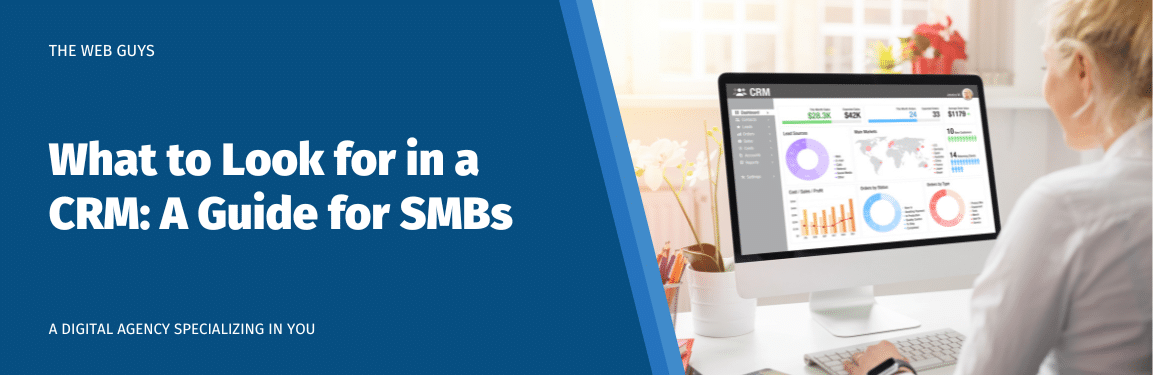
The Web Guys understands that for small and medium-sized businesses (SMBs), customer relationships are everything. But as customer lists grow, managing interactions, follow-ups, and data across multiple platforms can quickly become overwhelming. That’s where a Customer Relationship Management (CRM) system becomes essential. A CRM isn’t just a digital Rolodex—it’s a powerful tool that helps SMBs streamline operations, improve customer service, and drive revenue. However, not all CRMs are created equal, and for SMBs, choosing the right features can make or break adoption and ROI. Keep reading to learn about the most important CRM features that every small to midsize business should prioritize.
Contact and Lead Management
At its core, a CRM should offer robust contact and lead management capabilities. This includes storing detailed customer profiles, logging all communications, like calls, emails, and notes, and tracking leads throughout the sales funnel. Being able to easily segment customers based on demographics, purchase history, or behavior can help businesses deliver more personalized outreach and increase conversions.
Sales Pipeline Management
A visual sales pipeline allows teams to track the status of every lead or deal in real time. This CRM feature enables SMBs to forecast revenue, identify bottlenecks, and concentrate their attention on high-value opportunities. Look for drag-and-drop pipelines, customizable stages, and automated reminders for follow-ups—these tools help sales teams stay organized and efficient.
Email Integration and Automation
Most SMBs rely on email marketing as a primary communication channel. A good CRM should integrate seamlessly with platforms like Gmail or Outlook, allowing users to send, receive, and log emails without leaving the system. Even better is the ability to create email templates and automate sequences, helping businesses nurture leads and customers at scale without sacrificing personalization.
Task and Activity Management
Missing a follow-up can mean a lost sale. CRM features, such as task management tools, allow teams to set reminders, assign tasks, and track deadlines, ensuring that every opportunity is handled with care. Look for a CRM that offers daily to-do lists, calendar integration, and activity tracking so nothing falls through the cracks.
Reporting and Analytics
Data-driven decision-making is critical, and your CRM should help you do just that. Reporting tools provide valuable insights into sales performance, customer behavior, and campaign effectiveness. For SMBs, customizable dashboards and easy-to-read reports are key—especially if you’re working with limited marketing or sales staff.
Mobile Accessibility
In today’s work-from-anywhere environment, mobile access is non-negotiable. A CRM with a mobile app allows team members to update records, schedule meetings, and check customer details while on the go—keeping operations running smoothly whether you’re at a desk or out meeting clients.
Affordability and Scalability
Ultimately, the ideal CRM for an SMB must strike a balance between functionality and affordability. Many platforms offer tiered pricing, allowing you to start with the essentials and scale up as your needs evolve. Avoid bloated systems with features you’ll never use—instead, focus on a CRM that grows with your business.
Choosing the right CRM is one of the most strategic decisions an SMB can make. By focusing on core CRM features like lead management, email integration, task tracking, and reporting, you’ll gain a clear picture of your customer interactions and sales performance. A good CRM helps you build stronger relationships, close more deals, and grow your business with confidence. Contact The Web Guys at (616) 426-6536 at our Michigan office to learn more about what CRM features make the most sense for your business. With additional offices in Arizona, Florida, and Indiana, we provide digital marketing services for clients nationwide.